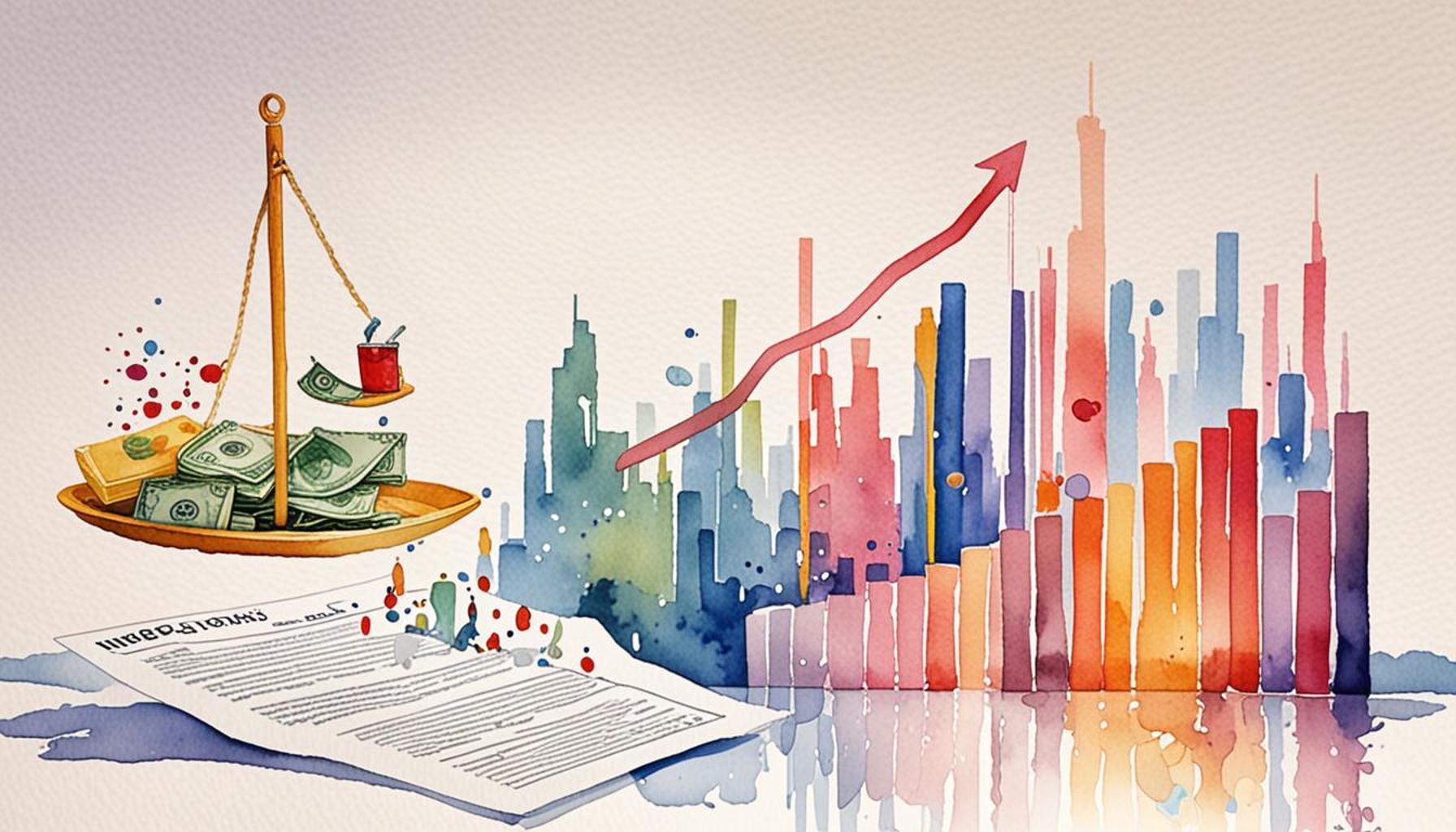
Analysis of American Families’ Indebtedness and Its Economic Implications

Understanding the Rising Indebtedness of American Families
The increasing indebtedness of American families has emerged as a pressing concern in recent years, raising questions about its implications for both households and the broader economy. Several factors contribute to this growing trend, which can significantly impact financial stability and economic health.
- High levels of consumer debt: In the United States, households are grappling with unprecedented levels of consumer debt, which encompasses credit card balances, student loans, and mortgages. As of 2023, consumer debt has surpassed $16 trillion, with student loans alone exceeding $1.7 trillion. This heavy reliance on borrowed funds signifies a troubling trend where families are unable to meet financial demands through savings or current income.
- Rising living costs: The cost of living continues to climb, particularly in areas such as housing, healthcare, and education. According to recent statistics, the median home price has increased by more than 20% over the past five years, outpacing wage growth significantly. Furthermore, healthcare costs are projected to rise by 5.4% annually, further straining family budgets, which in turn leads to increased borrowing.
- Cyclical financial behavior: Economic downturns often exacerbate the reliance on credit, as families find themselves contending with job losses or reduced income. The COVID-19 pandemic, for instance, saw many families diminishing their savings and turning to credit to cover essential expenses. This reactive financial behavior can lead to a cycle of accumulating debt that becomes increasingly difficult to manage.
Understanding the dynamics of family debt is imperative for policymakers, economists, and families alike. Indebtedness can lead to various economic ramifications that affect both individual households and the economy at large, such as:
- Reduced consumer spending: When families are burdened with high debt levels, they are often forced to cut back on discretionary spending. This reduction impacts local businesses and can slow economic growth, leading to a cycle of low consumer confidence and spending.
- Increased financial vulnerability: High levels of debt elevate the risk of financial instability, especially during economic fluctuations. Families may find it challenging to cope with unforeseen expenses, such as medical emergencies or major repairs, ultimately leading to defaults and bankruptcies.
- Impact on future savings: With significant portions of income directed toward debt repayment, families may struggle to save for emergencies, investments, or retirement. A recent survey indicated that nearly 60% of Americans stated they do not have enough savings to cover a $1,000 emergency expense, highlighting the urgency of addressing this issue.
This article delves into the statistical landscape of family debt in the United States, exploring its root causes and the cascading effects on personal finance and the economy as a whole. By examining current trends and potential solutions, we aim to provide a comprehensive understanding of this critical economic issue, empowering families to make informed financial decisions and encouraging policymakers to implement effective strategies for managing and reducing indebtedness.
DIVE DEEPER: Click here to discover the advantages and disadvantages of ETFs for your portfolio
Examining the Factors Driving Household Debt
The state of indebtedness among American families is influenced by a myriad of factors that converge to create a volatile financial landscape. It is essential to dissect these factors to understand their interplay and how they contribute to the overarching trend of increased indebtedness.
Consumer Behavior and Attitudes Toward Debt
One significant factor in rising family debt is the changing consumer attitude towards borrowing. Many families perceive debt as a necessary tool for achieving their financial goals, such as homeownership, education, or starting a business. This attitude is compounded by a culture of instant gratification, where immediate needs are often prioritized over long-term financial health. The availability of credit and the aggressive marketing of credit products further reinforce this behavior, encouraging families to live beyond their means.
Income Inequality and Stagnation
The widening gap in income distribution in the United States has also played a critical role in family indebtedness. While executive salaries and returns on investment have skyrocketed, wages for the average worker have not kept pace. The Federal Reserve reported that in the last two decades, the income growth for the bottom 90% of earners has been marginal when compared to the wealth accumulation of the top 10%. This income stagnation leaves many families struggling to meet their basic needs, ultimately leading to reliance on credit to bridge the financial gap.
The Role of Economic Policies
Economic policies also significantly impact household debt levels. Interest rates, which are currently at historic lows, have made borrowing more accessible and attractive. For example, mortgage rates have facilitated home buying, contributing to an escalation in debt as families take on larger loans than they would otherwise consider feasible. However, as the Federal Reserve signals potential rate hikes in response to inflationary pressures, the cost of servicing existing debt may become burdensome. This scenario has raised concerns about households’ ability to manage their finances effectively under changing economic conditions.
Financial Literacy and Education
Another contributing factor to the indebtedness of American families is a general lack of financial literacy. Many individuals are not equipped with the knowledge or skills to make informed financial decisions, leading to poor budgeting practices and insufficient understanding of credit implications. Studies show that only 57% of Americans could pass a basic financial literacy test, indicating a critical gap that needs to be addressed through education and community resources.
- Consumer attitudes towards debt: Many view borrowing as essential to achieving financial goals.
- Income inequality: Stagnant wages prevent families from covering basic needs without credit.
- Economic policies: Low interest rates increase borrowing but may lead to greater financial strain if rates rise.
- Financial literacy: Most Americans lack the knowledge to manage finances effectively, which exacerbates debt issues.
As we investigate these factors more thoroughly, it becomes evident that addressing family indebtedness requires a multifaceted approach. By fostering financial education, advocating for fairer wages, and promoting responsible consumer behavior, stakeholders can potentially ameliorate the rooted issues contributing to rising levels of household debt, ultimately leading to a more stable economic environment.
DISCOVER MORE: Click here to learn how to apply
Consequences of Rising Household Debt
The escalating levels of indebtedness among American families hold significant implications for both individual households and the broader economy. As families navigate increasingly complicated financial landscapes, their capacity to manage debt can lead to various outcomes, resulting in a ripple effect that influences economic stability and growth.
Impact on Consumer Spending
Household debt inherently affects consumer spending, which is a critical driver of economic growth in the United States. According to the Bureau of Economic Analysis, consumer spending accounts for approximately 70% of the nation’s gross domestic product (GDP). When families are encumbered by high debt levels, disposable income diminishes as they allocate more of their earnings towards servicing debt obligations. Consequently, reduced consumer spending can stifle economic growth, leading to sluggish demand for goods and services. In severe cases, this may contribute to recessionary conditions, hampering job creation and investment opportunities.
Increased Financial Stress and Mental Health Issues
The psychological burden associated with financial strain cannot be overlooked. Research has shown a direct correlation between debt levels and mental health concerns, including anxiety and depression. The American Psychological Association highlights that financial difficulties can lead to chronic stress, impacting overall well-being and productivity. Households facing immense debt often struggle to maintain routines and may find it challenging to meet everyday expenses, leading to a cycle of anxiety and further financial destabilization.
Long-term Consequences for Wealth Accumulation
The burden of high household debt significantly impairs wealth accumulation for American families. Research from the Federal Reserve indicates that households with substantial debt are less likely to save for retirement or invest in assets such as real estate and education. This scenario perpetuates cycles of poverty, limiting upward mobility among lower and middle-income families. As young adults graduate with student loans and high levels of credit card debt, they may be discouraged from pursuing traditional wealth-building opportunities.
Challenges for Future Economic Policy
The current state of household indebtedness poses challenges for policymakers as they navigate economic recovery strategies. ***Rising debt levels can complicate fiscal policy***, as increasing consumer confidence and spending becomes crucial for stimulating economic growth. Policymakers face the delicate balance of implementing measures that promote responsible lending while ensuring that families are supported in managing their debt loads effectively. For instance, a push for tighter regulations on lending practices may mitigate financial risk but can simultaneously limit access to credit for families that depend on it for essential expenditures.
- Impact on consumer spending: High debt levels constrain disposable income, reducing demand for goods and services.
- Financial stress and mental health: Debt contributes to anxiety and stress, affecting overall well-being and productivity.
- Long-term wealth accumulation: Households burdened with debt struggle to save and invest, perpetuating poverty cycles.
- Challenges for economic policy: Policymakers must find a balance between regulating lending and supporting families’ financial needs.
With these multifaceted consequences of rising household debt, it becomes increasingly evident that addressing the issue is vital not only for the well-being of American families but also for the health of the national economy. Understanding the implications of this indebtedness is crucial for stakeholders at every level, from policymakers to financial institutions and educational organizations, as they seek to cultivate lasting solutions that promote financial resilience among families across the nation.
DIVE DEEPER: Click here to discover sustainable investment strategies
Conclusion
The analysis of American families’ indebtedness exposes a troubling trend that not only impacts individual households but also reverberates throughout the national economy. The growing burden of debt, primarily manifested through credit cards, student loans, and mortgages, critically undermines consumer spending, a cornerstone of economic stability and growth. As families allocate a significant portion of their income to debt repayment, discretionary spending shrinks, leading to less demand for goods and services and potential long-term economic stagnation.
Moreover, the psychological ramifications of indebtedness cannot be ignored. The pressure to meet financial obligations can contribute to heightened levels of anxiety and stress, adversely affecting mental health and overall productivity. This creates a vicious cycle where stress exacerbates financial troubles, leading to deeper debt and further emotional distress. Additionally, as families struggle to save or invest, their ability to accumulate wealth diminishes, often exacerbating existing inequalities and restricting future economic mobility.
In light of these issues, it is imperative for policymakers to adopt a comprehensive approach that balances responsible lending practices with support mechanisms for families in financial distress. Initiatives aimed at enhancing financial education, providing resources for debt management, and improving access to affordable credit could help families regain control over their finances. By fostering financial resilience among households, we can pave the way for a healthier economy that benefits all Americans. The path forward necessitates a collaborative effort from governments, financial institutions, and community organizations, striving to create an environment where families can thrive free from the shackles of excessive debt.

Linda Carter
Linda Carter is a writer and financial expert specializing in personal finance and financial planning. With extensive experience helping individuals achieve financial stability and make informed decisions, Linda shares her knowledge on the our platform. Her goal is to empower readers with practical advice and strategies for financial success.